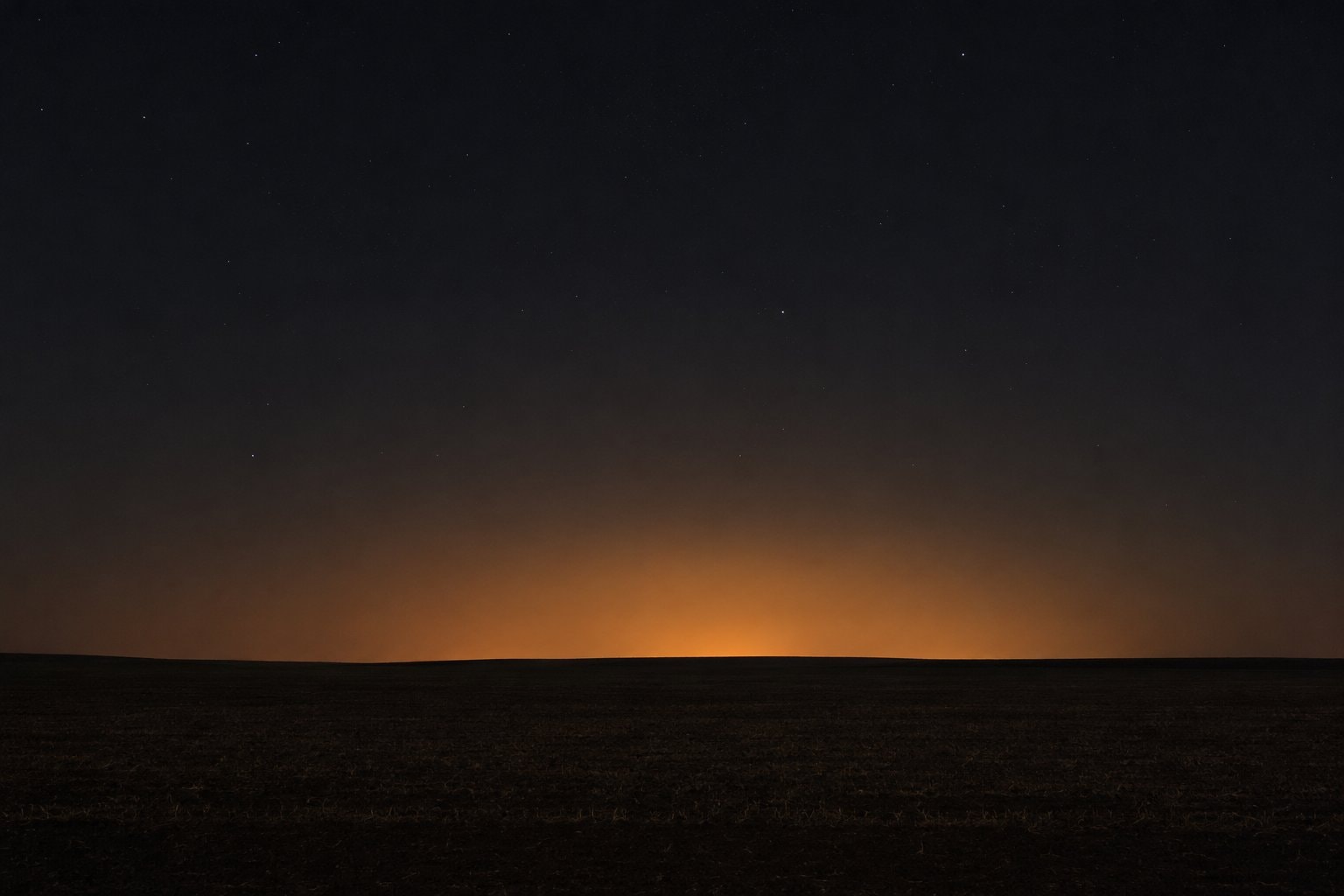
A dark sky is a place to see both bright landmarks and faint connections between them. When the background becomes bright, the stars remain present but their light is harder to distinguish. That makes light pollution a practical observing question as well as an environmental subject. Wikipedia describes Earth Hour as a worldwide movement organised by the World Wildlife Fund, with a symbolic switching off of nonessential electric lights. This guide runs no events or observing sessions; the campaign is described here as a reference for understanding the wider discussion of darkness.
A symbol and an everyday observing problem
Earth Hour’s own website presents the lights-off gesture as symbolic support for the planet, within a wider concern for climate and nature. A symbolic gesture and the conditions at an eyepiece are related subjects, but they ask different questions. A campaign can draw attention to the use of lighting; an observer needs to understand the light reaching a particular patch of sky on a particular night. Keep that distinction clear when interpreting what a temporary switch-off can mean.
The durable observing question is where light goes and when it is needed. A bright lamp aimed across a yard can affect the view even when the distant sky is reasonably dark. A broad glow on the horizon can remain when nearby lamps are out. Recognising those different sources makes the problem more specific than simply describing every disappointing night as too bright.
Skyglow, glare and light that crosses a boundary
Wikipedia’s light-pollution article distinguishes light trespass, excessive illumination, glare, clutter and skyglow. These categories can overlap, but they are useful for describing what is actually interfering with an observing view. A light in your line of sight, light spilling into a neighbouring area and a glowing sky are different observations. Note which is present before deciding what change would be relevant.
The article describes skyglow as a bright haze above cities produced when electric light interacts with material in the atmosphere, making stars and the Milky Way harder to see. The broad dome seen toward a town is therefore different from a thin cloud glowing near a bright lamp, even though both can affect the apparent sky. Compare directions and make a note of any nearby source. An observing description should include the background sky, not only whether the target was found.
Do not assume that distance from a bright centre settles every problem. A dark-looking horizon can still have a lamp beside the observing position. Check where the intended targets will lie and whether local light crosses that line of sight. The page on choosing an observing place puts skyglow beside horizons, permission and firm ground.
Use a scale as a description
Wikipedia’s Bortle-scale article describes a nine-level scale for comparing night-sky brightness and the visibility of celestial objects. Its account contrasts bright skies, where faint diffuse objects are difficult to see, with darker skies where many more stars and diffuse glows become visible. The scale gives observers a shared language for the background sky without turning every session into a laboratory measurement.
Begin with visible features rather than guessing a classification from a map. Can the Milky Way be followed? Are faint patches distinct from the surrounding sky? Does the horizon glow strongly in a direction? Record the conditions that might complicate the view, including cloud and moonlight. The same place can offer different observing experiences when those conditions change.
A broad classification should not erase directional differences. The view toward a nearby town may be much brighter than the view away from it, and a low target has a different background from an overhead target. Describe those distinctions in the notebook. A useful description helps explain what happened at the eyepiece rather than declaring a permanent label for a place.
Why darkness matters beyond a telescope
Wikipedia describes DarkSky International as a nonprofit whose work centres on the value of dark skies and education about outdoor lighting. The same account distinguishes glare from light entering the sky, and identifies inadequate shielding as a source of unwanted outdoor light. This gives the subject a practical focus: the design and use of a light, rather than a demand that every outdoor task happen in darkness. An observing guide can explain that focus without presenting an organisation as a partner or an official source of local arrangements.
The National Park Service’s night-skies page describes natural darkness as part of ecosystems, wilderness character and cultural traditions. The night sky is therefore more than a backdrop for finding objects. It is part of the wider setting in which observing takes place. The service’s account links natural light-and-dark cycles to ecosystems and recognises the place of the sky in cultural practices. No particular park or observing destination is needed to understand that idea.
For a beginner, that wider value can start with attention. Notice how a dark horizon changes the sense of the sky, and how a direct lamp interrupts it. Keep the observing record descriptive. There is no need to claim an environmental outcome from an individual session or to attach a dramatic promise to a simple lighting choice.
What public star counts can tell
Wikipedia describes Globe at Night as an international research program using public observations of visible stars to map light pollution. Its account explains that comparing the observed constellation with charts of differing stellar visibility provides a qualitative measure of light pollution. A simple observation can become more useful when the same method is used consistently and the conditions are recorded.
The Globe at Night website explains the comparison with a star chart that most closely matches the faintest stars visible toward the chosen constellation. The comparison concerns the stars you can actually distinguish, not the stars you know ought to be there. Cloud, twilight, moonlight and nearby lamps can all complicate a casual glance. Taking care over those conditions matters to the meaning of the record.
The guide to citizen science describes sky-brightness observations alongside meteor and variable-star work. These subjects share a modest discipline: use the stated method, keep the observation honest and distinguish a measurement from a guess. A familiar constellation can serve as a reference scene rather than merely a picture to recognise.
Ordinary lighting choices
For outdoor lighting, begin with the task that needs light. Ask whether the fixture is shielded, whether its light is directed down toward that task and whether it remains on when the task is finished. Wikipedia’s light-pollution article identifies unsuitable fixtures and light directed away from the intended area as sources of excessive illumination. These are concrete questions about use and direction, without requiring a special claim about a lamp or product.
At the observing position, keep the local situation distinct from the broader skyglow. Moving out of the direct line of a nearby lamp may change the immediate view while leaving the horizon glow untouched. The guide to observing forecasts explains the other parts of a night’s conditions. Dark skies, clear skies and steady air belong together in a plan, but each describes a different part of what the observer can see.