Citizen science connects an ordinary observation with a question that other people can study. The important step is not owning advanced equipment; it is recording something in a form that can be understood and compared. A bright meteor, a changing star and the brightness of the sky require different kinds of record. Choose a project by the question it asks, then learn its method before assuming that a casual note is suitable data.
Wikipedia's citizen-science article describes research involving the public and includes astronomy among its fields. It also discusses uncertainty from measurement errors and bias when information comes from many contributors. A contribution is not made reliable merely by being submitted. Clear methods, honest uncertainty and consistent recording are part of what turns a personal impression into something that can be examined.
Stars that change brightness
Wikipedia's variable-star article explains that a star's apparent brightness can change because its own light output changes or because some of its light is blocked. A variable star therefore offers a reason to return to the same point in the sky. The interest is not only where the star is, but how its appearance changes over time. That makes a sequence of records more useful than a description of an isolated view.
Wikipedia's AAVSO article describes the American Association of Variable Star Observers as an international nonprofit that coordinates and analyses observations made largely by amateurs. Its records form light curves showing changes in a star's brightness, and are made available to researchers and educators. The connection between an observer's estimate and a longer record is central to this kind of work. An observation gains context when it can be compared with other observations of the same target.
A light curve is a picture of change, not a photograph of the star. Reading it means asking what was measured, when the measurement was made and how uncertain it may be. A gap in a sequence is different from evidence that nothing happened. Likewise, a doubtful estimate should remain doubtful rather than becoming a precise value on paper. The habits of careful description are useful before learning any specialised measurement technique.
Start by becoming comfortable with a field of stars. Recognising nearby patterns makes it easier to identify a target consistently instead of confusing it with a neighbour. The star-chart guide explains how a map and the actual view can be matched. For a formal project, its own instructions determine which chart, comparison method and record are appropriate. General familiarity is preparation, not a substitute for that method.
Meteors and a fleeting view
NASA's meteors-and-meteorites overview distinguishes material still in space, the bright event as it passes through an atmosphere and any material that reaches the ground. This vocabulary matters because an observed streak is not itself a stone found on the ground. Record the thing actually observed. A short-lived view may support a description of direction and brightness without supporting an explanation of where any surviving material went.
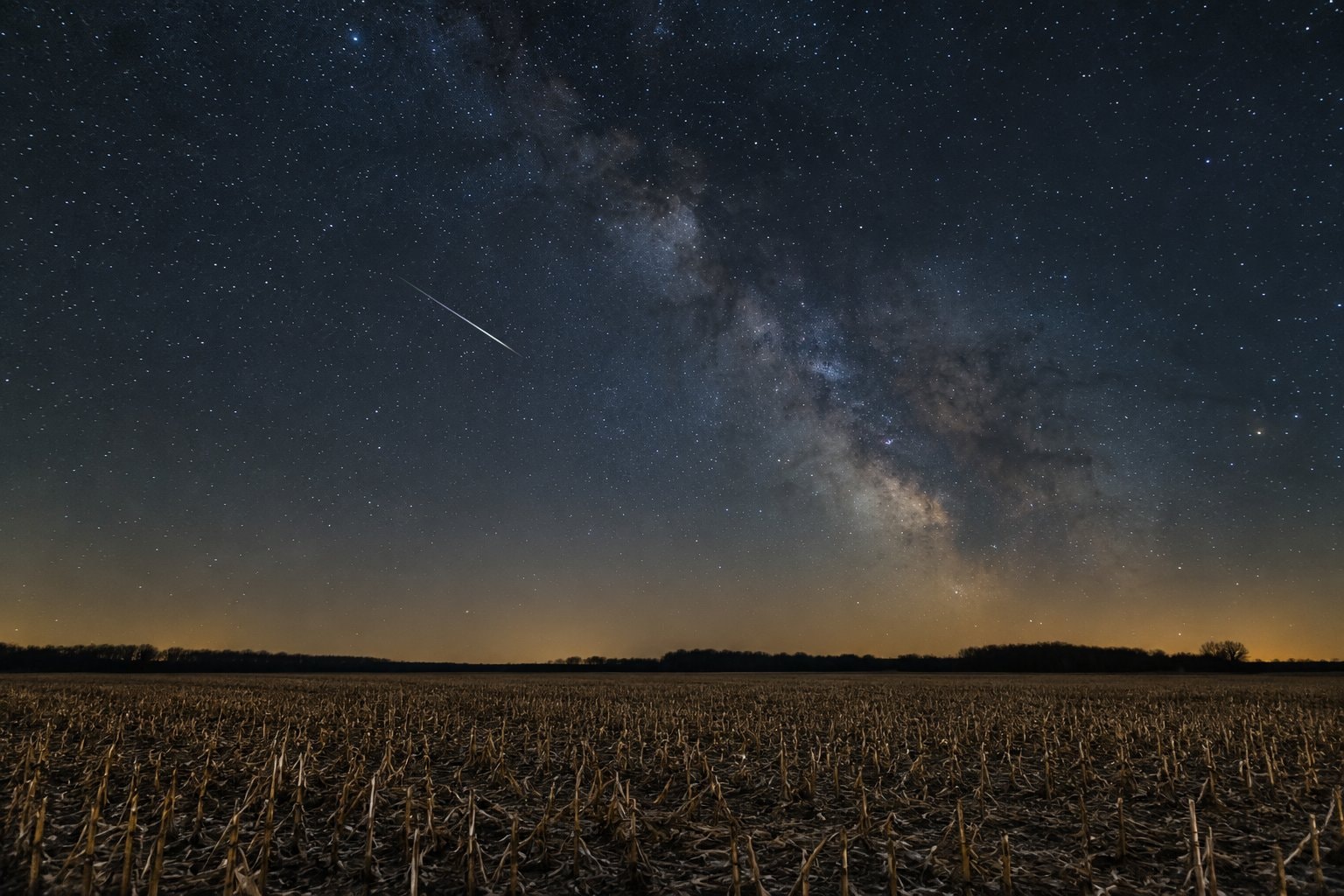
The American Meteor Society's own introduction presents fireball reporting alongside information about meteors and meteor showers. Its fireball page describes a fireball as a very bright meteor and asks for details such as brightness, colour, duration and its apparent start and end relative to stars or the horizon. The fleeting nature of the event makes prompt, plain notes valuable. An observer can describe an uncertain impression without filling in missing details afterward.
Separate what you saw from what you inferred. A bright flash, a change in colour or apparent fragmentation belongs in a description if it was actually noticed. A claim about distance or physical size may not follow from the view alone. Nearby foreground features can help describe the direction, but do not show how close the meteor was. A remembered event is easier to compare with another account when the observer's viewpoint and uncertainty remain clear.
The fireball page says that reports are retained for study and shared with interested organisations and the public. That makes the record more than a story about an unusual night. Several viewpoints may supply context that an individual observer did not have. This guide explains the subject and collects no reports. The year-in-the-sky page places meteor showers alongside the other sights that can shape an observing plan.
Measuring the sky around the stars
Globe at Night's own description presents an international citizen-science campaign in which people measure and submit observations of night-sky brightness. Its method includes choosing a star chart that resembles the visible constellation and noting cloud cover. Here the object of study is not a distant star changing, but the sky background through which stars are seen. A familiar constellation becomes a comparison tool.
Wikipedia's Globe at Night article explains that reported star visibility is used to map light pollution, while clouds, atmospheric conditions and the observer's vision can affect the result. A record needs its context for that reason. Moonlight, a nearby lamp and an obstructed view are not interchangeable explanations of a difficult observation. Follow the project's conditions rather than treating any evening as a comparable measurement.
There is also a useful distinction between no stars being visible and a chart not being recognised. The first concerns the sky and conditions; the second may concern orientation or familiarity. Take time to understand which question the method is asking. A record made in unsuitable conditions may still be a useful personal note, but it should not silently be treated as the kind of measurement the project requests. The light-pollution page explains skyglow and the choices about lighting that sit behind this subject.
A record another person can understand
Good notes preserve the observation before an explanation is added. Use clear language for the target, the viewpoint, the conditions and anything that made the record uncertain. Keep the original note available when organising the information later. If a value was estimated, say so; if an event was only partly seen, do not write a complete sequence. The purpose is to make the record interpretable, not to make the observer appear certain.
Consistency is often a more useful ambition than drama. Repeated observations of a familiar target or sky field can build confidence in the method. A spectacular event may be interesting, but it does not remove the need to follow the same rules about evidence. Citizen science asks an observer to think about the next person who reads the record. That reader should be able to tell what was observed and what remains unknown.
Astronomy has several routes from curiosity to a useful record. The organisations guide distinguishes groups concerned with changing stars, meteors, outreach and dark skies. Understanding their different aims helps keep a contribution connected to a real question. The broad habit is the same across them: observe carefully, describe plainly and let the evidence retain its limits.