Astronomy can be a quiet individual hobby and a shared activity. A club gives people somewhere to discuss what they saw, learn how equipment behaves and compare different interests. Public observing and more focused observing gatherings serve different purposes, even when both involve telescopes under the sky. This guide runs no club and offers no membership.
Wikipedia's amateur-astronomy article describes societies as meeting points for people with their own observing equipment as well as people interested mainly in learning about astronomy. Their activities vary with local circumstances and the interests of the people involved. It is useful to understand those possibilities without assuming that every society has the same resources, methods or expectations.
Learning through a shared view
Looking through an unfamiliar telescope raises concrete questions that descriptions alone may leave unanswered. Where does the eyepiece sit? How does the mount move? What changes when a different eyepiece is fitted? A public viewing activity can turn these into visible demonstrations rather than abstract specifications. It also makes clear that a telescope view is something to examine patiently, not simply a picture placed in front of the eye.
A considerate observer lets the person responsible for an instrument explain it before touching a control. Ask about focusing and where to stand, then keep clear of the tripod and any cables. There may be a reason for a particular position, attachment or setting that is not obvious in the dark. Treating another person's equipment carefully is ordinary courtesy, not a test of technical knowledge.
The getting-started page covers the skills that can be practised independently, including finding bright patterns and keeping simple notes. Bringing those questions to a shared observing setting gives the discussion a purpose. For example, you might compare the view you expected with the view actually seen, rather than asking whether an instrument is simply good or bad. Conditions, target choice and ease of use all deserve a place in that conversation.
The Astronomical League
Wikipedia's Astronomical League article describes an umbrella organisation of amateur astronomy societies that supports education, observation and communication between societies. Its observing awards are based on locating and describing specified objects or events. That emphasis is different from collecting equipment: the work is in finding, examining and recording something in the sky. An observing program provides a framework for doing that with a consistent purpose.
A list can be valuable even without a deadline or an award as your aim. It offers a way to choose targets and a reason to return to an object under different conditions. Notes become more useful when they describe the view and the circumstances instead of merely marking an object as seen. A difficult observation can remain a useful record if uncertainty is stated clearly. The question is what the observer could establish, not whether the page looks complete.
The Astronomical League's Messier Program List sorts targets into seasonal groups and gives reference details for the objects. Such a list connects the target's name with the information needed to recognise and plan for it. The Messier-list guide explains why this collection became useful to amateur observers. A program built around a list is a method of organising observation, not a promise that every target will be equally easy.
Outreach and the Night Sky Network
NASA's account of its Night Sky Network describes amateur clubs across the country explaining NASA mission science to public audiences. This is an example of clubs communicating astronomy as well as observing it. Outreach has an explanatory aim: helping someone connect a view, a model or a question with the wider science. A shared view can start a conversation about how an object is known, not just what it looks like.
An explanation works best when it respects what the listener can actually see. A faint glow in the eyepiece should not be described as though it were a richly coloured long-exposure photograph. The difference is useful in itself, because it opens a discussion of eyes, cameras and observing conditions. A clear account can leave room for both wonder and uncertainty. It does not need an extravagant description to make the sky interesting.
Wikipedia's Astronomy Day article describes an event intended to connect the public with astronomy enthusiasts, groups and professionals. It illustrates the same outward-facing part of the hobby without defining what any individual club must offer. The reader's guide to organisations and programs explains how outreach differs from data collection and dark-sky work. These activities overlap, but their immediate questions are different.
What a star party means
Wikipedia's star-party article defines a star party as a gathering for observing sky objects and events together, often at a naturally dark place. It also distinguishes public star parties in urban areas from gatherings whose main aim is observing under darker skies. The term therefore does not describe a single format. A beginner should not assume that every gathering is a guided introduction, or that every public demonstration needs a remote setting.
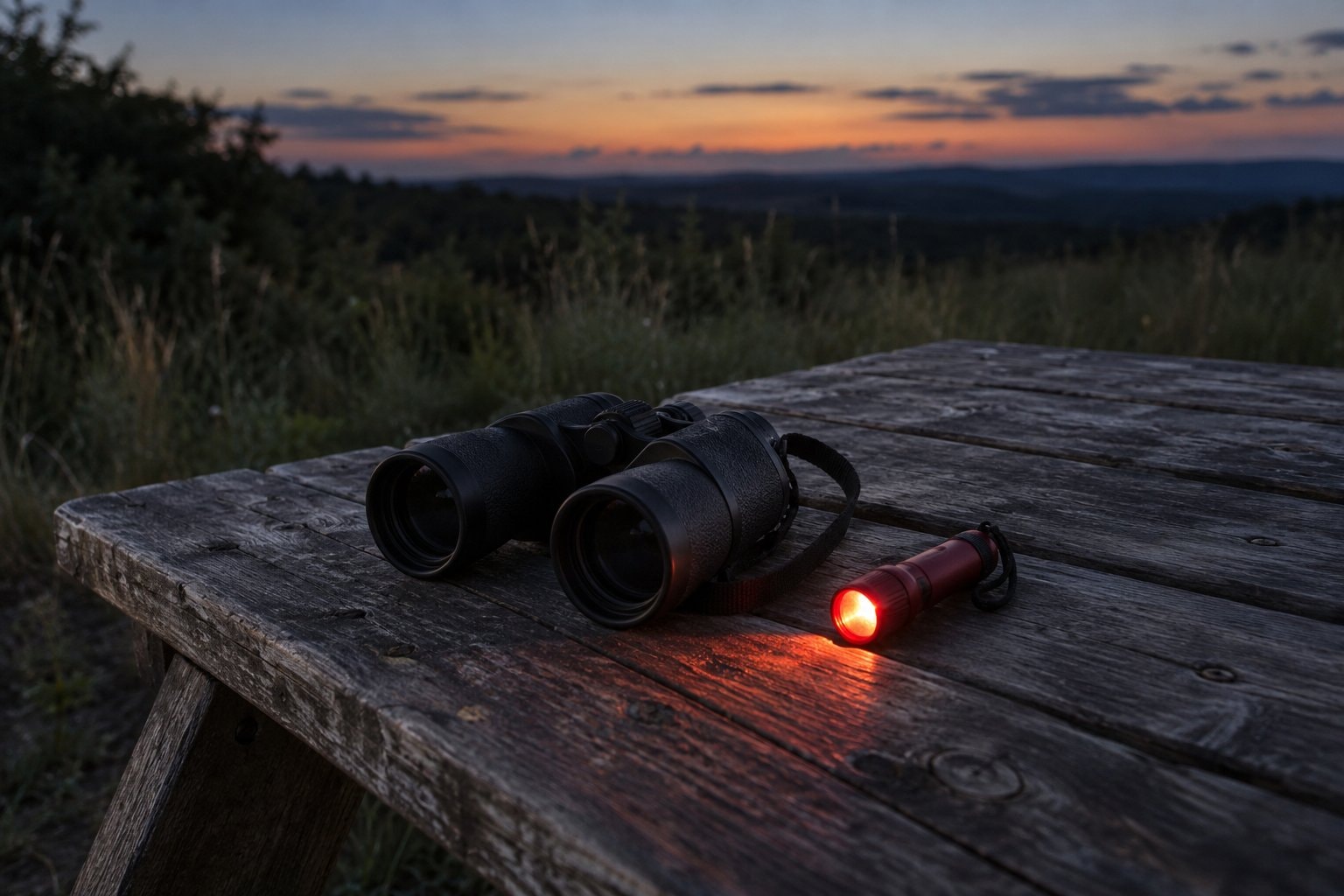
Darkness changes the practical etiquette. Keep a light directed toward the task that needs it rather than toward someone else's face or telescope. Leave space for people to move without brushing against equipment. Ask before stepping into an observing position, and give the observer time to finish a note or explanation. These small habits make a shared session easier to navigate. They also acknowledge that different observers may be concentrating on different tasks.
Pointing out the sky safely
Constellation descriptions, a chart and a spoken path from a bright star can point out a target without a beam. A laser pointer is not a necessary part of learning the sky. Where one is used in outreach, its apparent convenience does not remove the need to think about other people and traffic. A sky demonstration should never turn a pointer into a toy or a substitute for a careful explanation.
Wikipedia's laser-pointer article describes astronomical pointing as a use and identifies hazards to eyes and aircraft; never point a laser pointer at a person, an animal, a vehicle or an aircraft. A responsible explanation of the sky includes the limits of the equipment used to give it. Learning the names of bright patterns and describing their relationships remains useful whether an observer is alone or in a group.
Shared astronomy does not require everyone to develop the same interest. Some people value a pleasant view of the Moon; others prefer making a detailed record or explaining a target to someone else. A useful club setting gives those interests ways to meet without presenting one as the only proper form of the hobby.