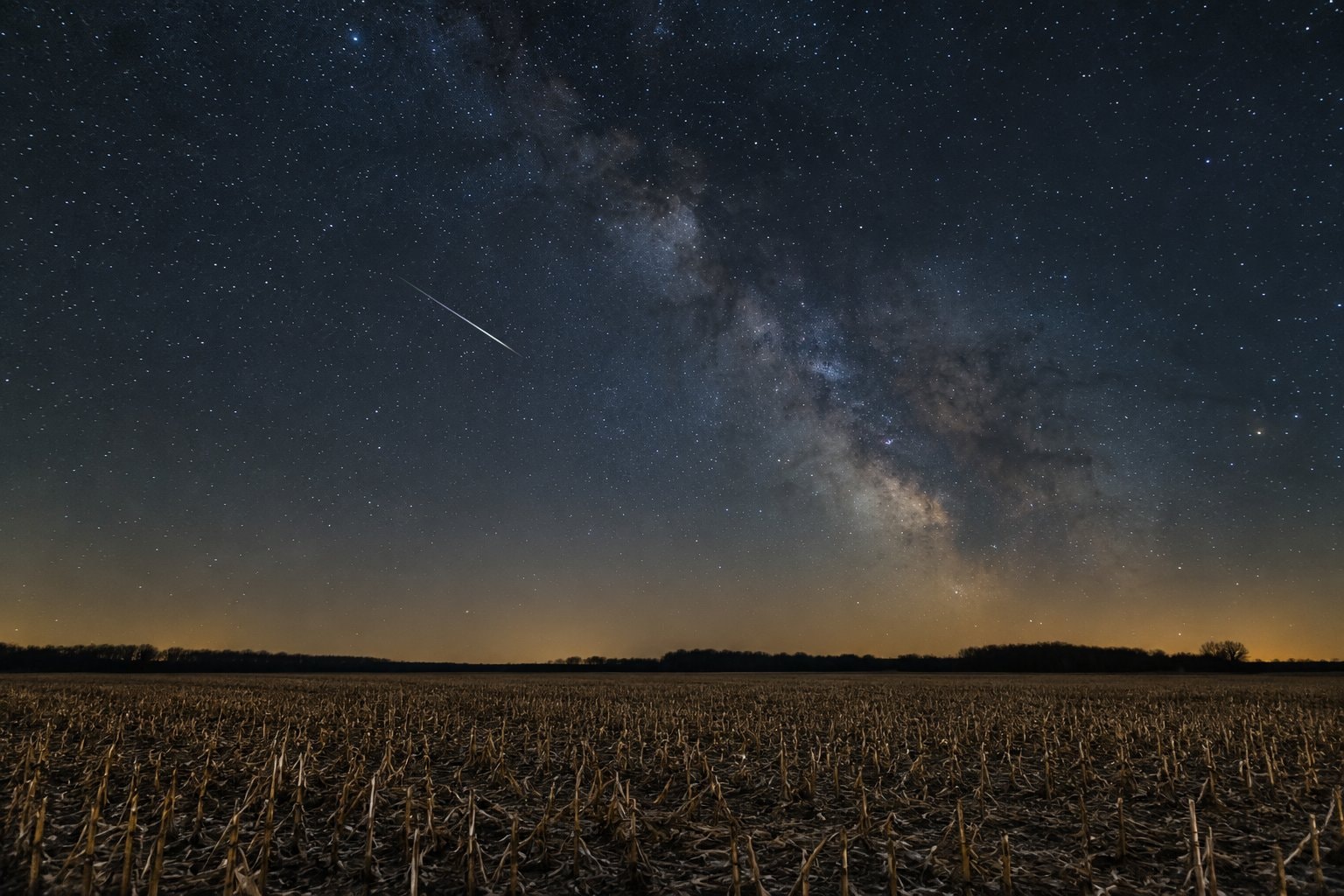
A year of observing is a changing set of opportunities, rather than a fixed timetable. The useful pattern is to match a visible target with the darkness, horizon and weather available to you. Constellations shift, moonlight changes and some sights arrive briefly. This guide runs no events or observing sessions. Its purpose here is to explain the kinds of sights that make an observing plan flexible and useful.
The familiar sky moves into a new season
Wikipedia’s constellation article explains that the night sky changes through the year because nighttime faces different parts of Earth’s orbit around the Sun. A constellation that suits an evening view during a part of the year may be poorly placed at the same time in another season. This is a change of viewing direction, not a sudden rearrangement of the stars. Keep the broad pattern in mind before choosing a target from a remembered photograph or a list.
A seasonal plan begins with what is already easy to recognise. Find a familiar star pattern, compare its position with a suitable chart and notice what lies nearby. Then choose a small set of targets that fit the visible sky. Leave room for a change of plan if cloud covers the intended field or the horizon is blocked.
Moonlight belongs in the same plan. A bright Moon may make a faint-object search less rewarding while offering a subject of its own. The page on lunar observing explains phases and the changing light across the lunar surface. Decide whether the night’s purpose is to examine a bright subject or to look for a faint glow before carrying equipment outside.
Meteor showers and their radiants
Wikipedia’s meteor-shower article explains that a shower’s apparent radiant comes from meteoroids entering the atmosphere on parallel paths. Trace several apparent streaks backward in the mind and they seem to lead toward a common region. The radiant is a useful identifier for a shower, not a point that must be watched continuously. Keep a comfortable, broad view of the sky, with attention on the area available around the radiant.
NASA’s meteors-and-meteorites overview distinguishes a meteoroid in space, a meteor seen during its atmospheric passage and a meteorite that reaches the ground. These terms distinguish stages of the same general kind of material rather than different names for every light in the sky. A meteor is a brief atmospheric event; a slow moving point is a different observing question. Keep that difference clear when describing a sighting.
NASA’s Perseids page places the shower’s peak in mid-August and identifies Perseus as its radiant constellation, while explaining that the constellation is not the physical source of the meteors. Think of it as a recurring summer subject whose visibility depends on the night’s conditions. A familiar seasonal name does not promise a particular number of visible streaks. Moonlight, cloud and the part of the sky available to the observer all belong in an honest account of the session.
Wikipedia’s Geminids article describes a December shower with a radiant in Gemini and the asteroid Phaethon as its parent body. This example also shows why a shower should not automatically be described as debris from a comet. The physical source and the apparent direction are separate facts. A winter shower adds the practical need for a comfortable place to look and clothing suited to a quiet night outside.
When a meteor is unusually bright
The American Meteor Society’s fireball page defines a fireball as a very bright meteor and describes the details useful in a sighting report, including colour, duration and the apparent beginning and end of its path. A brief event is easier to describe if you notice its relation to the horizon and background stars before the memory becomes vague. Record what was actually seen, including any uncertainty about direction or colour. The page on citizen science under the stars explains how consistent observations fit into a broader record.
A bright streak can be memorable without a dramatic interpretation. Distinguish a steady trail from a flash or apparent fragmentation if you saw those features, and avoid adding them because a picture suggests they are typical. A careful description is useful precisely because it preserves the observer’s limits.
Comets and moving lights
Wikipedia’s comet article describes an icy body releasing gas as it approaches the Sun, forming a surrounding coma and sometimes a tail of gas and dust. A comet’s appearance can therefore be a diffuse patch rather than a sharp point, but the conditions and the object’s brightness determine the view. Use an appropriate position reference, confirm the field and keep the initial description simple. A familiar name is not a guarantee of a visible tail.
Wikipedia describes the International Space Station as an orbital research station in low Earth orbit. NASA’s skywatching guide includes watching the station pass overhead and explains that satellites are often sunlit while an observer is in twilight below. Its guide also notes that satellites may fade as their paths carry them into darkness, or brighten as they enter sunlight. Look for motion relative to the star pattern and record whether the light was steady or changing.
Keep a passing point distinct from the brief streak of a meteor. An observation can describe motion without identifying the object with certainty. Use an appropriate prediction when the intention is specifically to watch a station pass, and compare the direction with the view rather than assuming every moving light is the station.
Aurora and unusual space weather
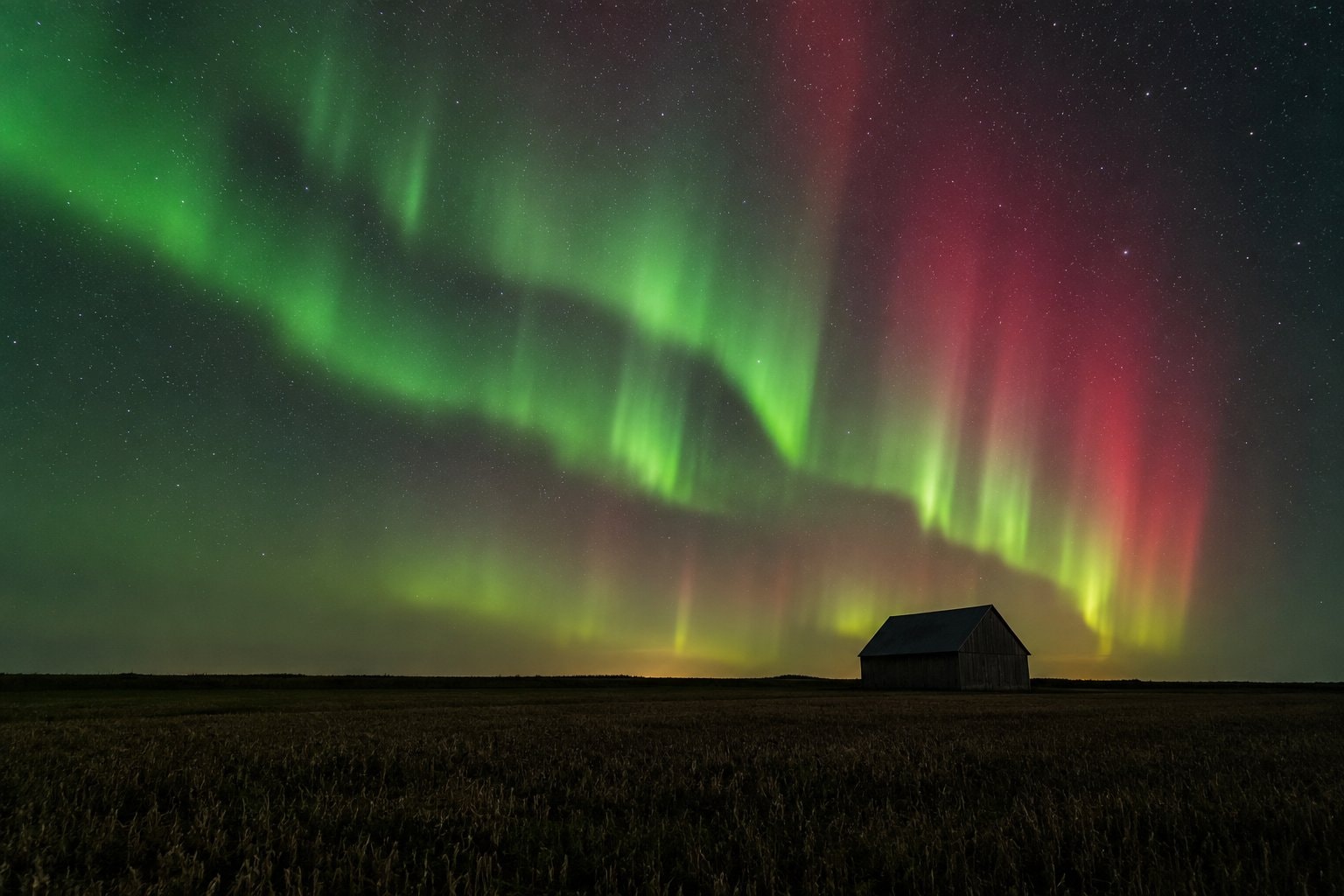
Wikipedia’s aurora article describes charged particles interacting with gases in Earth’s upper atmosphere to produce coloured light. The display belongs to Earth’s atmosphere, even though the processes behind it extend into space. Look for patterns that change against the background sky, and keep cloud, nearby lighting and moonlight in mind when describing a faint glow.
Wikipedia’s account of the May 2024 solar storms records aurora at much lower latitudes than usual during that historic event. NOAA’s Space Weather Prediction Center explains that strong geomagnetic storms expand the auroral region toward lower latitudes, while clear, dark skies remain necessary for seeing the display. The historic example shows why a familiar latitude is not an absolute boundary; it does not promise a display on another night. A forecast of space-weather activity and a local weather forecast answer different questions, and both need to fit the observing plan.
Solar and lunar eclipses
NASA’s skywatching guide explains that a lunar eclipse happens when Earth’s shadow falls across the Moon, whereas a solar eclipse happens when the Moon passes between Earth and the Sun. Wikipedia’s solar-eclipse account distinguishes a limited path of totality from the wider region that sees a partial eclipse. An eclipse’s geometry determines the kind of view available from a place. An event visible somewhere else is not automatically the same experience from your own horizon.
For the Sun, viewing method comes before the spectacle. The page on safe solar observing sets out the necessary distinction between eye-only viewers and front-mounted filters for instruments. Do not carry assumptions from an ordinary lunar session into a solar session. A familiar telescope still needs the correct solar arrangement.
Turn reference information into a modest plan
NASA’s monthly skywatching guide offers changing skywatching tips as a reference for planning. The U.S. Naval Observatory’s Sun and Moon data service supplies rise, set and transit times, civil twilight information and lunar phases for a chosen date and location. These resources are useful for checking the sky available during an observing period without treating a general guide as a local event calendar.
Bring the astronomical information together with the horizon, the weather and the time you can comfortably spend outside. Choose a main question and a simpler alternative. A planned galaxy search can become a lunar session; a cloudy interval can be time to revise a chart. A useful year of observing grows from repeated, well described looks, including quiet nights when a familiar sight teaches something new.